

Published on: September 28, 2026
When Distance Changes the Design:
The same floodlight can produce a very different result when the target moves further away. The reason is not output. It is geometry. A floodlight does not illuminate mounting heights. It illuminates a target. That distinction matters.
A luminaire mounted 20 metres above a working plane may need to illuminate directly below the pole, 30 metres across a hardstand, or along a narrow rail corridor. The mounting height can remain unchanged while the required optical distribution changes completely.
20 Metres Doesn’t Tell You Enough
Consider two MegaFloods mounted at the same height.One needs to illuminate a broad area around the mast. The other needs to reach an operational yard from its perimeter.Same luminaire height.Different horizontal distances. Different target shapes. Different angles of incidence. Different photometric requirements.This is why the question “Which optic should I use at 20 metres?” has no useful answer without understanding the site.
The real question is: Where does the light need to go from 20 metres?
Distance Changes the Intensity Requirement
Total lumen output tells us how much luminous flux leaves the luminaire.It does not tell us how much intensity is available towards a particular point on the working plane.That information comes from the luminaire’s photometry.
As the target moves further from the mounting position, maintaining the required illuminance depends on having sufficient luminous intensity in that direction. The optical distribution determines how the available flux is allocated.
A concentrated distribution can place greater intensity within a smaller angular region. A broader distribution spreads that flux across a wider field. An asymmetric distribution can bias intensity towards a target that sits predominantly forward of the mounting position.
The engineering objective is not the narrowest beam or the widest coverage.It is the right intensity distribution for the target.
Height Doesn’t Select the Optic
This is where simple rules break down.Higher mounting positions do not automatically require narrower distributions.
A high mast positioned centrally within a yard has a different task from a high mast positioned at its boundary. A rail corridor presents a different geometry. The target determines where intensity needs to be placed.
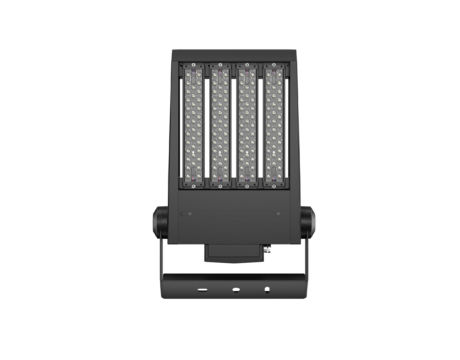
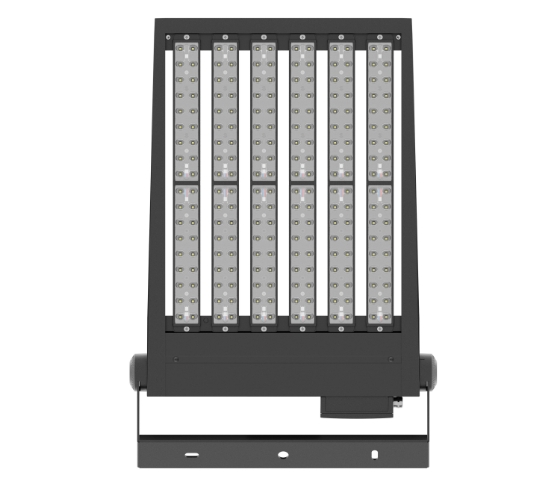
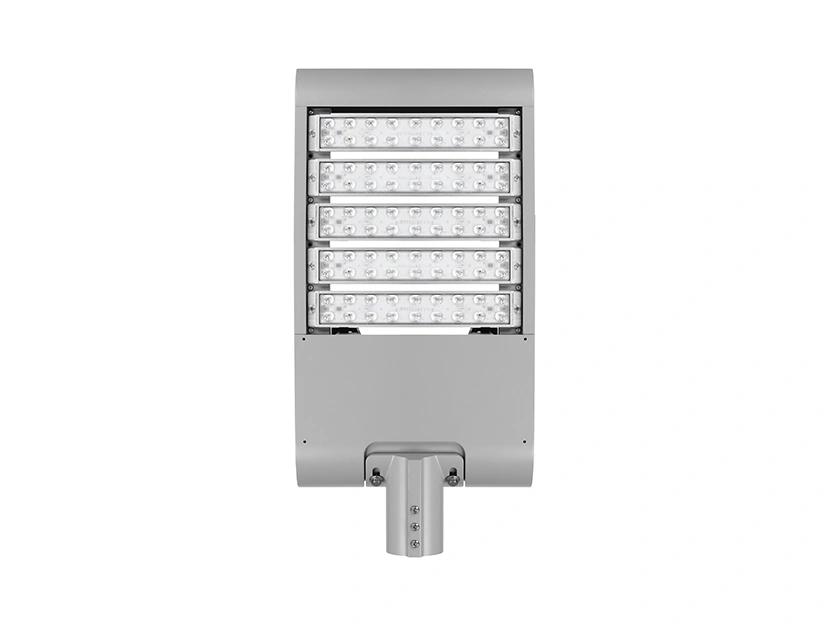
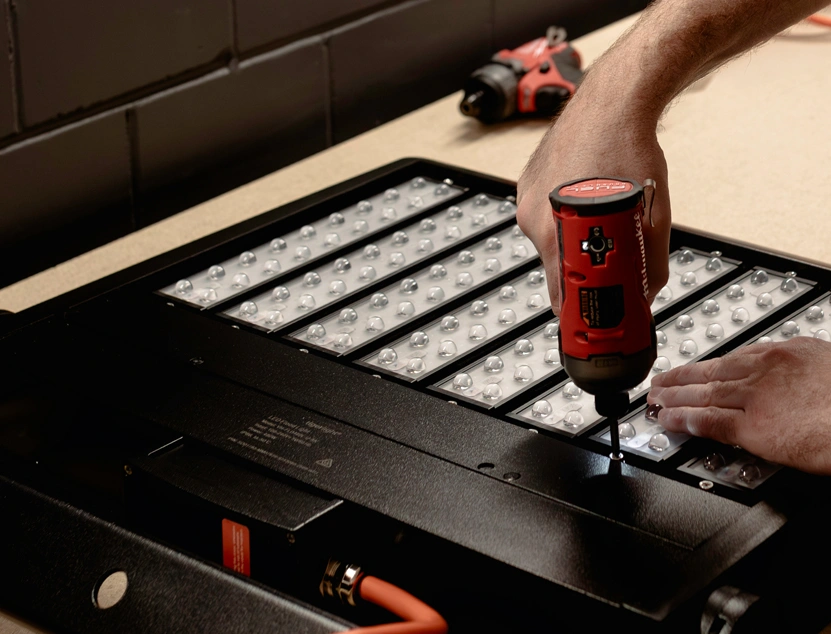
Tigerlight’s MegaFlood platform reflects that requirement with multiple symmetric and asymmetric photometric distributions rather than a single standard beam. The current MegaFlood technical material includes seven symmetric and 12 asymmetric lens distributions, including back-light control options.
The choice between them starts with geometry, not height.
The Furthest Point Is Not the Design
Reaching a distant calculation point proves very little on its own.The area between the luminaire and that point still has to work.A highly concentrated distribution may maintain illuminance at distance but produce excessive peaks closer to the mounting position. A broader distribution may improve coverage but fail to deliver sufficient intensity at the extremities.
Then adjacent luminaires enter the calculation.Their distributions overlap. Their aiming interacts. Their spacing changes the result.
The engineer is not designing individual pools of light. The engineer is designing the combined illuminance across the working plane.
That is why a successful result is judged by the required illuminance and uniformity across the target, not by the maximum distance a floodlight can reach.
Sometimes the Problem Isn’t Distance
It is what sits in the way. Industrial sites are full of obstructions: containers, conveyors, stockpiles, buildings and plant.
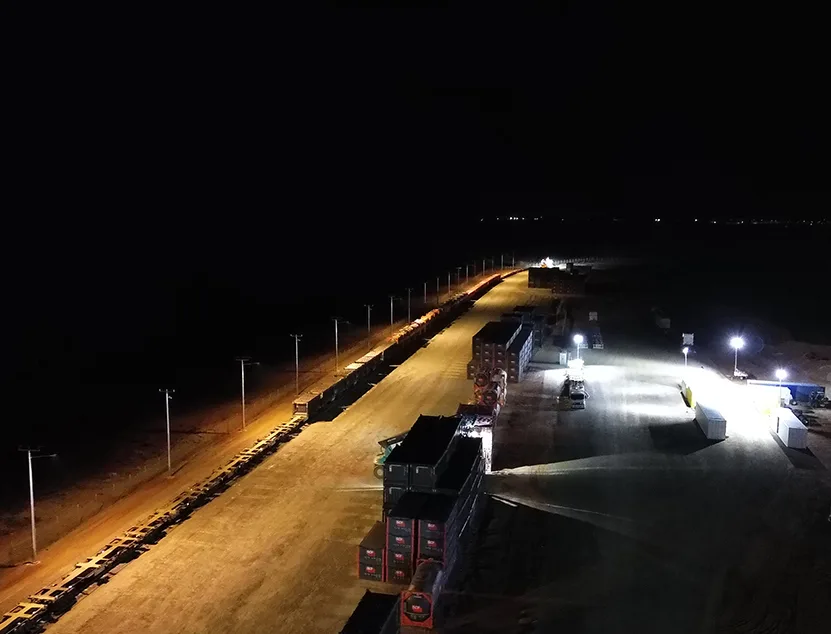
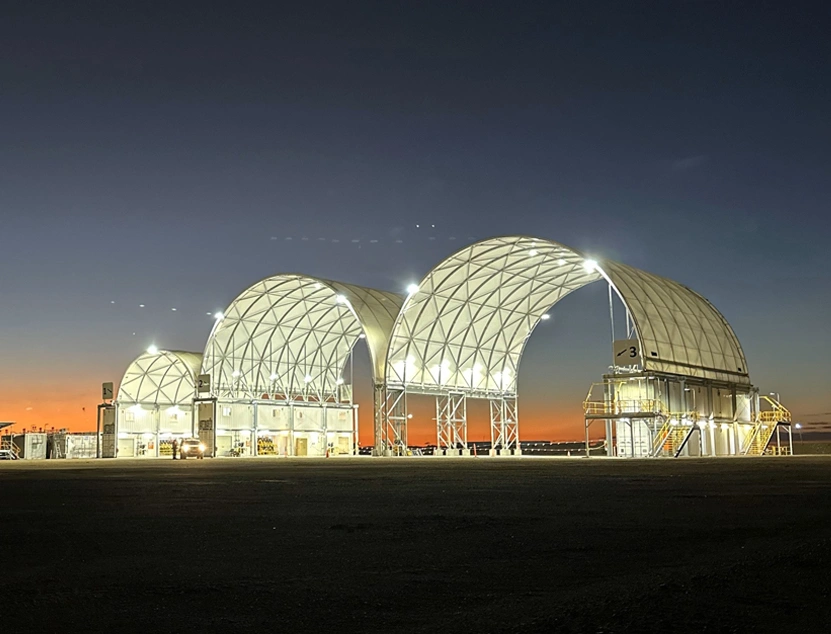
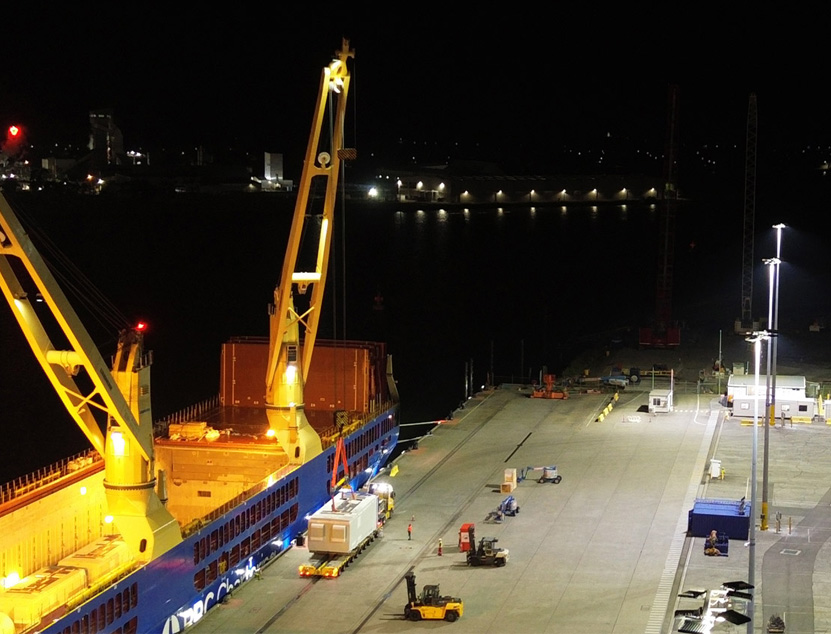
The Riverina Intermodal Freight & Logistics Terminal is a good example.The site uses mounting positions at 7, 12 and 25 metres, but the critical complication was containers stacked approximately 13 metres high.Adding more output would not remove the shadows created by the containers.
Tigerlight used T4M optics and extended outreach arms to alter the light path across the stacks, improving coverage of the hardstand below.That is an important distinction.If geometry is limiting the light path, output alone cannot solve it.
Design From the Target Back
This is the more useful way to approach optical selection.Start with the target.
Where does the working area begin? Where does it end? What illuminance and uniformity are required? Where can luminaires be mounted? What is the horizontal offset? What obstructs the light path?
Then look at the photometry.
Determine which distribution delivers the required intensity across that geometry. Model how adjacent luminaires interact. Refine output, positioning and aiming until the required result is achieved.
The optic is not selected because the pole is 20 metres high.
It is selected because of what the light needs to do from that position.
Distance Changes. The Target Decides.
There is no universal optic for 10, 20 or 30 metres.
Mounting height establishes part of the geometry. Horizontal distance establishes the rest. Target dimensions, mounting position and physical obstructions complete the problem.
Only then can the photometric distribution be properly evaluated.
So when the mounting distance increases, don’t start by asking how much more light is required.
Ask:
Where Does the Light Need to Go?
Then engineer the distribution around the answer.
Tigerlight’s MegaFlood range provides multiple symmetric and asymmetric optical distributions across scalable output configurations, allowing the lighting design to be engineered around the target geometry of each application.
Working with high mounting positions, long throws or complex site geometry? Talk to Tigerlight’s team.