


Published on: September 28, 2026
Performance, Evolved
MegaFlood Gen 2 increases efficacy from 146 to 163 lm/W. But in large-scale industrial floodlighting, the more important question is how efficiently that output is converted into the required lighting outcome.
Lumens per watt (lm/W) is a valuable measure of LED luminaire efficacy, but it does not define the efficiency of a complete lighting system. Two industrial floodlights with similar or even significantly different efficacy can deliver very different results once applied to a project.
Optical distribution, mounting height, spacing, aiming and site geometry determine how effectively the available light reaches the working plane and how much installed power is ultimately required to achieve the specified illuminance and uniformity.
For engineers, the distinction is important: lm/W measures the efficiency of the luminaire. The lighting design determines the efficiency of the system.
Efficacy is the starting point.
Higher LED floodlight efficacy means more available light for each watt of electrical input. On large mining, rail, port and infrastructure projects, improvements at luminaire level can translate into meaningful reductions in connected load and energy consumption.
But efficacy does not describe distribution.
A high-efficacy floodlight with an unsuitable optic may require greater wattage or additional luminaires to achieve the design criteria. Conversely, an appropriate optical distribution can use the available output more effectively to achieve the required illuminance and uniformity with a lower total installed load.
The relevant engineering comparison is therefore not simply which floodlight produces the most lumens per watt, but how much system power is required to achieve the specified photometric result.
Optimising Light Distribution
Large-scale industrial floodlighting is fundamentally a distribution problem.
Mine sites, rail corridors, ports, hardstands and logistics facilities typically combine high mounting positions, long throws, physical obstructions and large target areas. Total lumen output provides limited information about how effectively a luminaire will perform under these conditions.
Optical selection determines where intensity is placed.
The correct distribution can improve coverage and uniformity while controlling glare and spill. An unsuitable distribution can send otherwise efficiently generated light outside the target area or create excessive intensity where it provides little operational value.
This is why photometric data and project-specific lighting calculations should be assessed alongside headline efficacy.
Mounting Geometry Changes the Photometric Result.
Floodlight performance cannot be separated from mounting geometry.
Height, spacing, outreach, orientation and tilt determine how the luminaire’s photometric distribution intersects with the working plane.
At higher mounting heights and longer throws, simply increasing lumen output does not necessarily compensate for poor optical selection. Increasing tilt may extend forward throw, for example, but can also increase glare, upward light and boundary spill.
The design therefore needs to optimise output, optic, mounting height, spacing and aiming as one system.
This is where high luminaire efficacy becomes useful system efficiency.
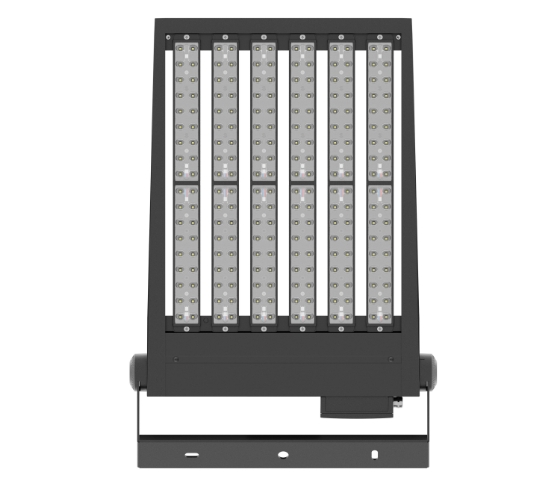
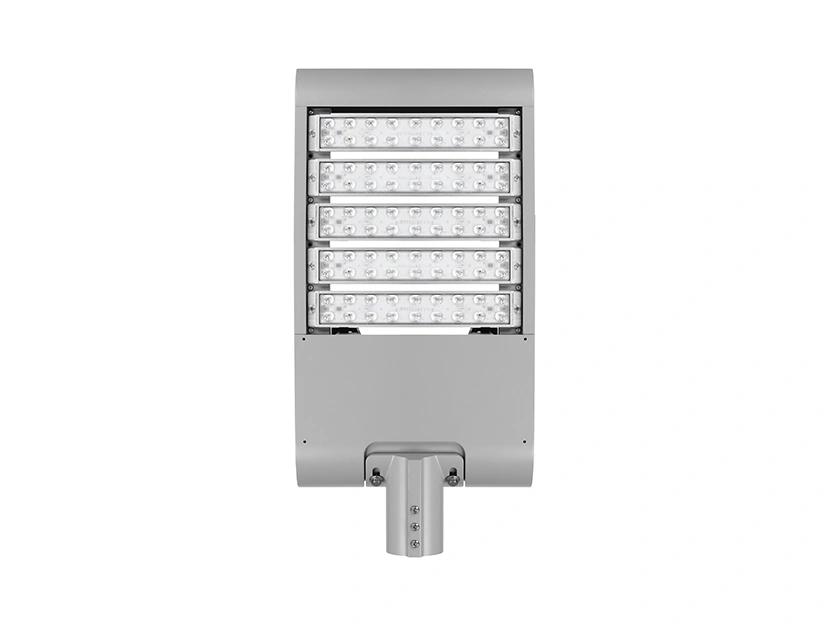
MegaFlood
MegaFlood GEN 2: Higher Output from a Lower Input Load.
The new MegaFlood Gen 2 improves the starting point for that calculation.
Compared with the previous MegaFlood configuration, input power has reduced from 302 W to 287 W, while light output has increased from 44,170 lumens to 47,055 lumens. As a result, luminaire efficacy increases from 146 lm/W to 163 lm/W.
That equates to approximately 6.5% more light output while using approximately 5% less power.
For an individual floodlight, the improvement is clear: more available output from a lower electrical input.
Across a large industrial installation, the impact becomes more significant.
A 100-luminaire installation based on the previous 302 W configuration represents a connected load of 30.2 kW. At 287 W per luminaire, MegaFlood Gen 2 reduces that to 28.7 kW — 1.5 kW less connected load while simultaneously increasing available lumen output.
At 12 operating hours per night, that difference represents approximately 6,570 kWh less energy consumption per year, before considering controls or further optimisation within the lighting design.
Actual energy consumption will depend on operating hours, controls, luminaire quantities and the final lighting configuration, but the engineering principle remains small improvements in luminaire efficacy compound when applied at scale.
Higher Efficacy Creates Greater Design Capacity
The engineering advantage of MegaFlood Gen 2 is not the 163 lm/W figure in isolation.
Higher output from a lower input load gives lighting designers greater capacity to optimise the complete installation.
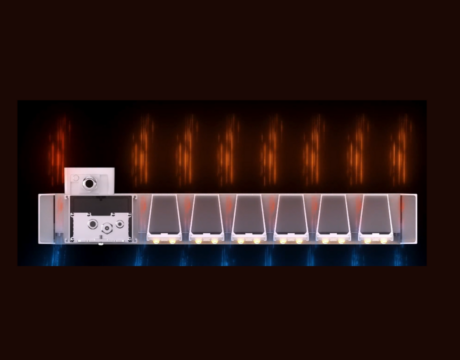
The MegaFlood platform combines high-efficacy LED performance with multiple precision optical distributions, allowing output to be configured around different mounting positions, throws and site geometries.
If higher efficacy and appropriate optical selection allow the required illuminance and uniformity to be achieved with lower installed wattage, fewer luminaires or more effective spacing, the efficiency improvement moves beyond the individual fitting and into the complete lighting system.
Gen 2 improves how efficiently the luminaire generates light. Engineering determines how efficiently the project uses it.
System Efficiency is Measured at the Working Plane.
For engineers evaluating industrial LED floodlights, the final comparison should be made at design level.
Luminaire efficacy remains important, but it needs to be assessed alongside optical distribution, calculated illuminance, uniformity, mounting height, spacing, luminaire quantity, glare, spill light and total connected load.
The highest lm/W figure does not automatically produce the lowest-energy lighting design.
The stronger measure is the total system power required to achieve the specified photometric performance.
This distinction becomes particularly important on mining and heavy industrial sites, where long throws, high mounting positions and limited infrastructure can make optical performance as important as raw output.z
Engineering the Output Around the Application.
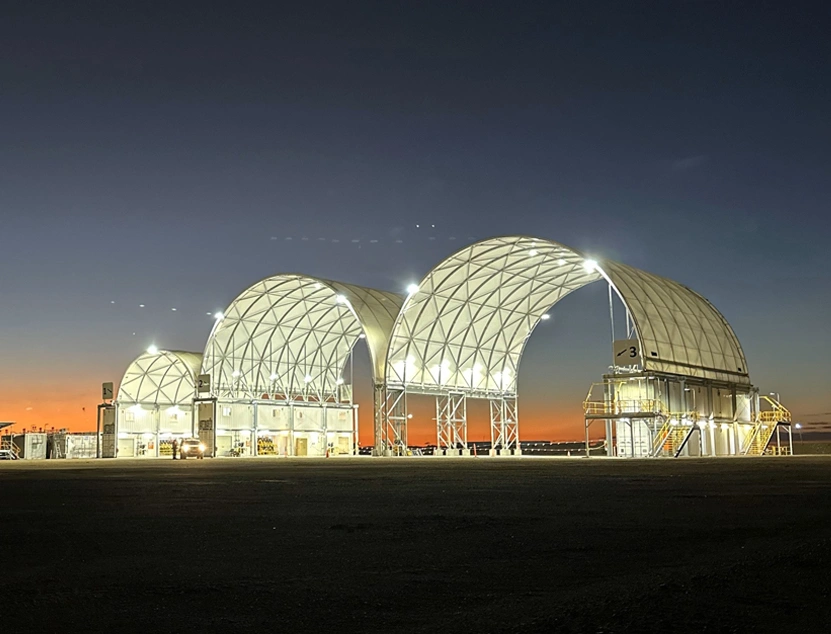
Tigerlight’s MegaFlood installations demonstrate this principle at scale.
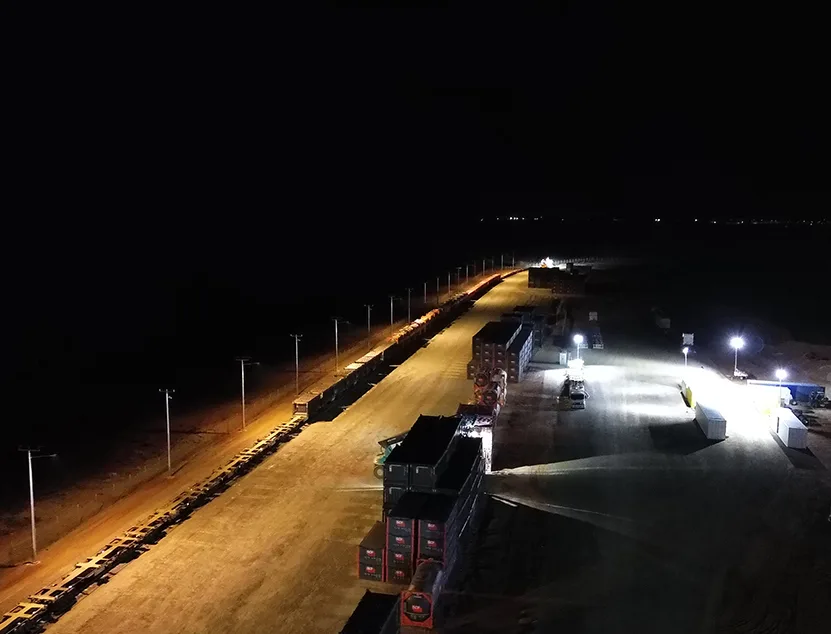
At BHP Nelson Point Operations Rail Precinct, more than 550 MegaFlood luminaires replaced ageing 1000 W HPS floodlights. The 480 W MegaFlood configuration was combined with asymmetric T4M optics to direct light across long rail corridors and operational areas.
Average illumination increased from approximately 10 lux to 30 lux, while improving uniformity and controlling glare.
The engineering outcome was not driven by wattage alone. Output, optical distribution, mounting conditions and site geometry were considered together to achieve the required result.
The Riverina Intermodal Freight & Logistics Terminal presented a different photometric challenge.
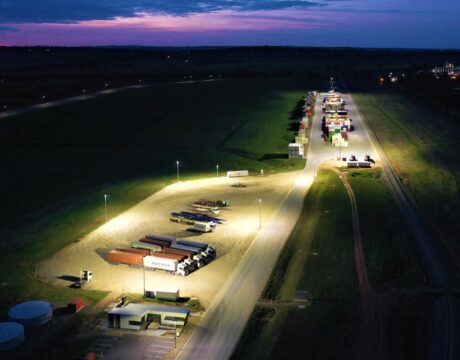
Container stacks approximately 13 metres high created significant potential for shadowing across the hardstand. Rather than relying solely on additional output, the lighting design combined MegaFlood luminaires with extended outreach arms and T4M optical distributions to improve penetration and distribute light more effectively across the operational area.
Different sites require different configurations.
The engineering principle is the same: available output needs to be controlled around the application.
Beyond Lumens Per Watt
MegaFlood Gen 2 moves the platform from 146 to 163 lm/W while increasing light output and reducing input power.
That is a measurable improvement in LED floodlight efficacy.
But for engineers specifying large-scale industrial lighting, the value of higher efficacy is realised at system level.
When higher output from lower power is combined with appropriate optical distribution, mounting geometry and photometric design, it creates the potential for lower connected load and more effective utilisation of the available light.
The objective is not simply to maximise lumens per watt. It is to achieve the specified lighting outcome with the lowest practical system load.
That is the difference between luminaire efficacy and system efficiency.
MegaFlood GEN 2: Performance, Evolved
Tigerlight’s MegaFlood range is engineered as a configurable industrial floodlighting platform for mining, rail, ports, infrastructure and other demanding large-scale applications.
MegaFlood Gen 2 evolves the platform further, delivering higher output, lower power consumption and increased efficacy, while retaining the optical flexibility required for application-specific lighting design.
Working on a large-scale lighting project? Talk to Tigerlight’s team about the right MegaFlood configuration for your application.