


Published on: May 18, 2026
Why Modular Floodlighting Changes Large-Scale Projects
Most large-scale floodlighting systems are delivered to specification, achieving the required lux levels, meeting uniformity targets, and passing compliance checks. On paper, the design performs exactly as intended.
But large-scale industrial environments are not static. Over time, operational demands shift. Sites expand, layouts evolve, and performance expectations increase. What was once a well-balanced lighting design begins to operate outside the conditions it was originally engineered for.
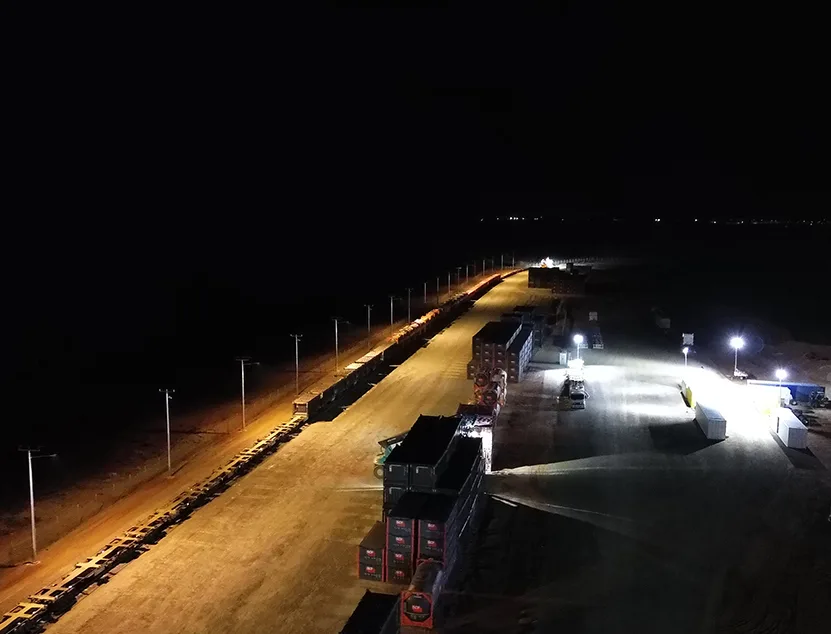
Modular floodlighting plays a critical role in large-scale industrial lighting, where flexibility, control, and long-term performance are essential. That is where the limitations of fixed-output floodlighting start to emerge. When lighting systems are asked to do more than they were designed. Across rail corridors, port facilities and industrial precincts, we’ve seen a consistent pattern.
A lighting system is designed for a defined footprint, specific mounting heights, and a set of operational parameters. As the site evolves, new zones are introduced, equipment is repositioned, and working hours extend deeper into night operations. These changes directly impact how light needs to be distributed across space.
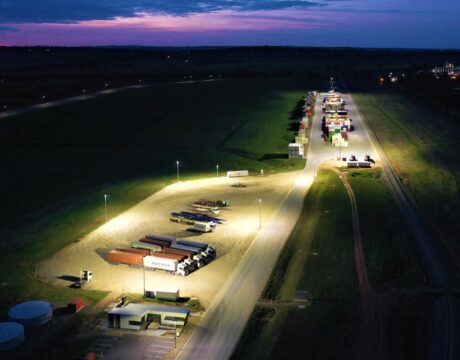
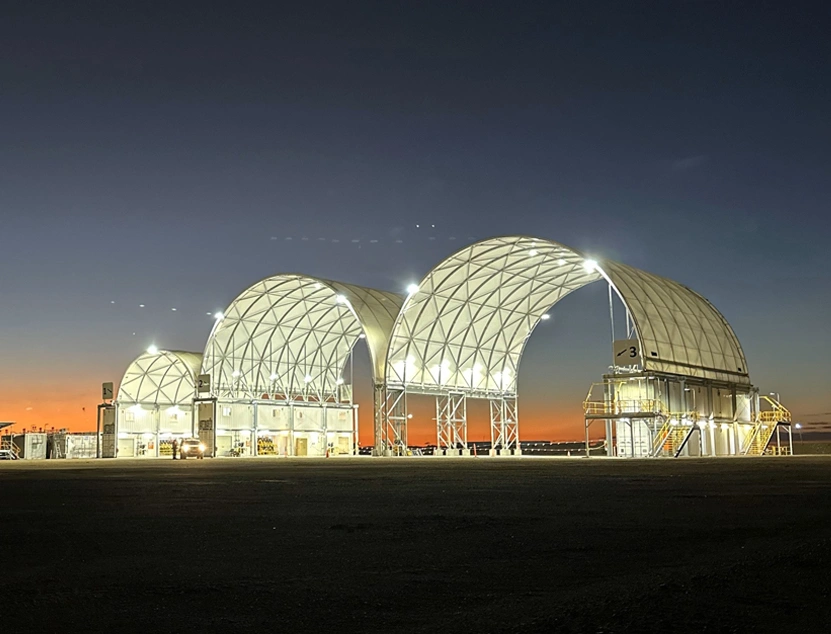
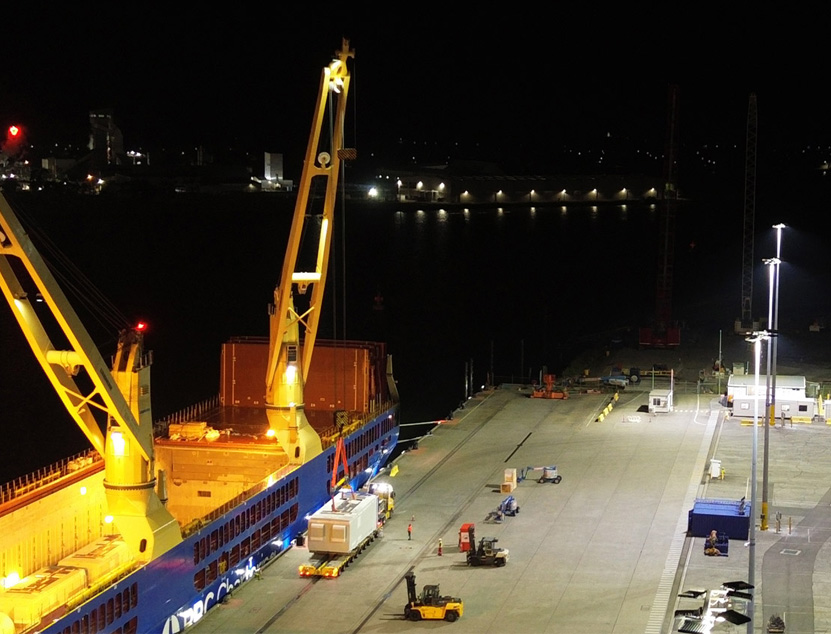
In one large port environment, additional operational areas required increased illumination levels, while adjacent zones demanded tighter control of spill light due to changing environmental conditions. The original system, while compliant at handover, lacked the flexibility to respond without significant modification.
This is where performance begins to drift. Not as a failure, but as a gradual misalignment between design intent and operational reality.
Traditional floodlighting systems are typically engineered as fixed-output solutions. Luminaire selection, wattage, optic distribution and mounting configuration are defined at the design stage and remain largely unchanged post-installation. When site conditions change, these systems offer limited pathways for adjustment.
Increasing illumination often requires the addition of new fittings, which can disrupt uniformity and introduce over-lighting in certain areas. Adjusting light distribution becomes challenging when optics are not designed for interchangeability or fine control. As a result, glare increases, visual comfort decreases, and light spills can exceed acceptable thresholds.
Maintaining compliance with standards such as AS 4282 becomes more complex, particularly in environments where surrounding conditions evolve over time. These challenges are not always immediate, but they accumulate, leading to higher maintenance intervention, increased energy consumption, and reduced lighting performance across the site.
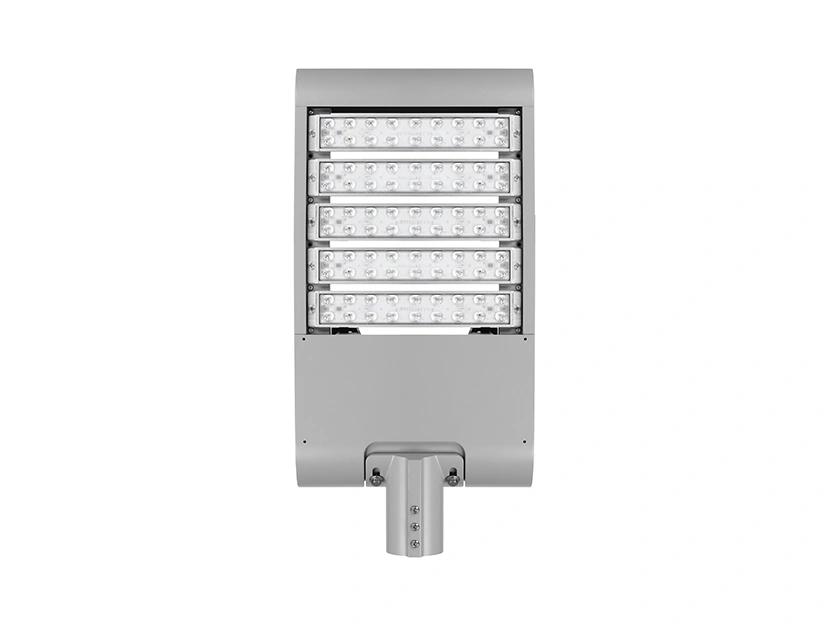
Modular floodlighting addresses these limitations by introducing flexibility at the system level. Rather than relying on a single fixed-output luminaire, modular systems are built around scalable configurations. Output levels can be adjusted through the addition or reduction of modules, allowing lighting performance to align more closely with changing requirements. This avoids the need for full system redesigns or inefficient retrofits.
Equally important is optical control. Modular platforms typically offer a wide range of precision optics, enabling designers to refine light distribution across different zones within the same site. This is critical for maintaining uniformity, reducing glare, and controlling obtrusive light in complex environments.
When applying modular floodlighting in large-scale environments, several technical factors need to be considered to ensure long-term performance:
-Mounting height and beam control: Higher mounting positions require precise optical distributions to maintain uniformity and minimise spill light at ground level.
-Optical selection and distribution types: Selecting the correct beam angles and asymmetric optics is critical for controlling glare and directing light only where it is required.
-Scalability of output: Systems should allow for incremental increases in lumen output without compromising efficiency or uniformity.
-Compliance with lighting standards: Designs must align with standards such as AS 4282 to manage obtrusive light and environmental impact.
-Maintenance and accessibility: Modular systems should support easier servicing, particularly in high mast or difficult-access installations.
One of the key advantages of modular floodlighting is its ability to maintain performance over time. As sites expand or operational demands increase, lighting systems can be scaled to meet new requirements without compromising existing infrastructure. Adjustments can be made at a system level rather than through fragmented additions, preserving both uniformity and efficiency.
This approach also supports better long-term compliance. By maintaining control over beam angles, output and distribution, lighting systems are better equipped to remain within acceptable limits for glare and spill, even as site conditions evolve.
In high-mounting applications, such as large-area floodlighting and high mast installations, this level of control becomes critical. Small changes in distribution or output at height can have a significant impact on ground-level performance and surrounding environments.
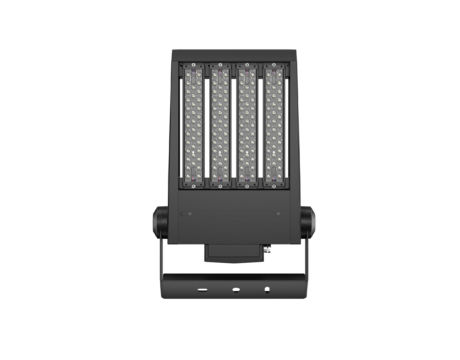
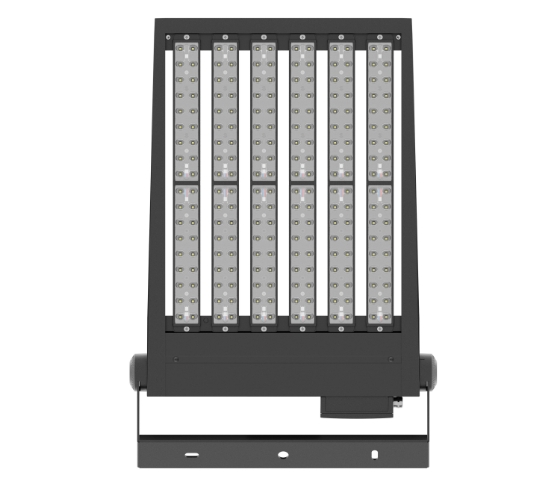
At Tigerlight, modular design is not a theoretical concept. It is a direct response to the challenges encountered across large-scale industrial projects. The MegaFlood Floodlight Range has been engineered as a scalable platform, allowing output, optical performance and configuration to be adapted across a wide range of applications. From targeted area lighting through to high mast installations, the system is designed to maintain control at scale.
This includes the ability to select from multiple optical distributions, manage high lumen outputs without sacrificing uniformity, and support installations where mounting heights and environmental conditions demand precise performance.
The objective is not simply to deliver illumination, but to ensure that lighting systems continue to perform as operational conditions change. Modular floodlighting represents a shift in how industrial lighting systems are defined.
It moves the focus away from a fixed installation outcome and towards long-term operational performance. Instead of designing a single moment in time, systems are engineered to respond to evolving site conditions, maintaining efficiency, compliance, and visual performance throughout the lifecycle of the project.