


Published on: November 12, 2026
AS/NZS 1158: Beyond Lux Levels
Two outdoor spaces can achieve similar lighting levels yet require fundamentally different designs. Understanding Category V and Category P is where effective road and public-space lighting begins.
A roadway, a pedestrian pathway and a public car park may appear to share a straightforward lighting objective: provide enough illumination for people to move safely and comfortably after dark. Yet the engineering requirements behind each application can be remarkably different.
Consider a roadway and a car park that record similar illuminance levels. The numbers may suggest comparable performance, but they reveal very little about whether either installation is meeting its intended purpose. A driver travelling along a road needs to identify objects, recognise changes in the road surface, and respond to conditions ahead. Someone walking through a car park is navigating a different environment, with different viewing angles, movement patterns, and visual demands.
These differences are central to AS/NZS 1158, the Australian and New Zealand series of standards governing lighting for roads and public spaces. Rather than prescribing one universal lighting level for outdoor environments, the series establishes performance requirements according to the type of space and the visual tasks involved.
For lighting engineers, consultants and electrical contractors, the classification is more than a compliance detail. It influences how performance is measured, which optical distributions are appropriate, and how the installation should be designed and assessed.
Category V vs Category P: Understanding What the Lighting Must Achieve
The distinction between Category V and Category P reflects two different approaches to outdoor lighting design. Category V primarily addresses environments where vehicular traffic is the dominant consideration, while Category P covers relevant pedestrian-oriented roads and public spaces.
The difference becomes clearer when considering how lighting performance is measured.
Category V
Primary consideration: Vehicular traffic.
Principal measure: Road-surface luminance (cd/m²).
Design focus: Visibility for drivers, luminance distribution, uniformity and glare control.
Category P
Primary consideration: Pedestrian-oriented roads and public spaces.
Principal measures: Illuminance and applicable uniformity criteria.
Design focus: Visual tasks and requirements of the relevant subcategory.
Category V: Why Roadway Lighting Is About What Drivers See
On a major roadway, the lighting task extends beyond illuminating the pavement. Drivers need sufficient visual information to detect objects and interpret the road environment while travelling at speed. What matters is not simply the amount of light reaching the road, but how the illuminated surface appears from the driver’s position.
This is why road-surface luminance, measured in candelas per square metre (cd/m²), is a principal performance measure for Category V lighting.
Luminance describes the brightness of a surface in a particular viewing direction, whereas illuminance, measured in lux, describes the amount of light arriving at that surface. The distinction is important because two road surfaces receiving the same illuminance can produce different luminance results due to variations in pavement reflectance and viewing geometry.
The relationship between the luminaire, the road surface and the driver therefore becomes critical. Pole spacing, mounting height, outreach, optical distribution and pavement characteristics all influence the calculated result.
A luminaire may deliver substantial light output and still fail to achieve the required luminance distribution or uniformity. Likewise, increasing output does not necessarily resolve problems associated with glare or poor optical control.
Category V design is therefore fundamentally about delivering the required visual conditions for drivers, not simply achieving a high lighting level. Depending on the road geometry and application, additional illuminance-based assessments may also be required.
Category P: A Different Approach to Pedestrian and Public-Space Lighting
The requirements change when the primary users are pedestrians or when lighting serves local roads and public spaces covered by Category P.
Consider a pedestrian pathway through a park. People are moving at lower speeds, navigating changes in the walking surface and observing their immediate surroundings. The lighting design must respond to these visual tasks rather than applying the same performance approach used for a major roadway.
Category P lighting is generally assessed using illuminance-based criteria, including applicable measures of lighting uniformity and other requirements associated with the selected subcategory.
However, the classification is not as simple as identifying a space as pedestrian-oriented.
A local access road, shared pathway, public activity area and outdoor car park may each fall under different Category P subcategories. The relevant requirements depend on the function of the space, the nature of its use and the applicable authority’s specifications.
For example, outdoor car parks are specifically addressed within the Category P framework, but their requirements should not automatically be applied to pedestrian pathways or local roads.
The practical implication is that selecting Category P is only the beginning. Establishing the correct subcategory is essential before a meaningful photometric assessment can take place.
The Problem With Designing Around an Average Lux Level
One of the most misleading figures in outdoor lighting design can also be one of the most frequently quoted: average illuminance.
It provides a useful indication of the light delivered across an assessment area, but it cannot describe the complete quality of the installation.
Imagine two hypothetical car park layouts, each producing an average horizontal illuminance of 20 lux. In the first arrangement, much of the light is concentrated around the poles, with noticeably darker areas between fittings. In the second, the optical distribution produces a more consistent spread across the same area.
Both calculations return the same average. Yet the distribution of light, and potentially the visual conditions experienced by users, is considerably different.
This is where uniformity becomes important. Averages can conceal substantial variations across a surface, particularly in installations with wide pole spacing, restricted mounting positions or unsuitable optics.
Glare introduces another consideration. A lighting arrangement may provide adequate illuminance but still create uncomfortable or visually disruptive conditions because of the position, intensity and direction of the light sources.
Neither issue can be resolved by considering average illuminance alone.
For engineers reviewing photometric calculations, the relevant question is not simply whether the target lux value has been reached. It is whether the design satisfies the complete set of performance requirements for the selected lighting category.
Similar lumen output does not necessarily mean equivalent photometric performance.
How Mounting Height and Optical Distribution Change the Result
Mounting height is often treated as a straightforward design variable. Raise the luminaire and the illuminated area generally becomes larger. But the relationship between height, coverage and lighting performance is more complex than it first appears.
As mounting height increases, the geometry between the luminaire and the target surface changes. Depending on the optical distribution, this can influence illuminance, uniformity, glare and the amount of light reaching areas beyond the intended boundary.
A luminaire mounted at 6 metres may produce a very different result when installed at 10 metres, even when its wattage, lumen output and optical distribution remain unchanged.
Pole spacing, setbacks, outreach and aiming angles add further variables. Each affects how the emitted light is distributed across the calculation area.
This becomes particularly relevant in retrofit projects, where existing pole locations and mounting heights are often retained to reduce civil and installation work.
Replacing an older luminaire with an LED fitting of similar output may appear to be a straightforward substitution. However, the new luminaire’s optical distribution can differ substantially from the original, changing the lighting pattern across the site.
The result may be improved performance, but it may also introduce unexpected variations in uniformity, glare or spill light.
A like-for-like electrical replacement is not necessarily a like-for-like photometric replacement.
For contractors, this is an important distinction when assessing alternative fittings or making installation changes. For designers, it reinforces the need to model the proposed luminaire within the actual mounting arrangement rather than relying on product specifications alone.
Why Higher Lumen Output Does Not Guarantee Better Lighting
Modern LED technology has made higher output and greater efficacy increasingly accessible. Yet neither measure, considered independently, establishes how effectively a luminaire will perform in a particular application.
Lumen output describes the total quantity of visible light produced. Efficacy, expressed in lumens per watt (lm/W), describes the relationship between that output and electrical input.
Both are valuable indicators of luminaire performance, but neither explains how the light is distributed across a roadway, pathway or open area.
Consider two luminaires with comparable lumen output but different optical distributions. One may concentrate light directly beneath the mounting position, while the other directs a greater proportion of its output towards the edges of the required area.
Depending on the geometry and performance criteria, the second luminaire may provide better uniformity or allow a more efficient pole arrangement. In another application, the first distribution may be more appropriate.
The result depends on the lighting task.
This is particularly important when designing large outdoor installations, where small changes in optical selection can influence the number of luminaires required, pole spacing and total connected load.
A high-efficacy luminaire with unsuitable optics may require additional fittings to achieve the specified result. Conversely, a well-matched distribution may provide the required performance with a more efficient overall configuration.
The most efficient lighting design is not necessarily the one using the highest-efficacy luminaire. It is the one that achieves the required photometric performance with an efficient complete system.
When the Design Changes Between Calculation and Installation
A photometric calculation represents a defined installation under a particular set of assumptions. These include the selected luminaire, optical distribution, mounting height, pole positions, orientation, aiming and other application-specific parameters.
In practice, however, construction conditions do not always match the original design.
A pole may need to be relocated to avoid underground services. A mounting bracket may be substituted because of structural constraints. A contractor may propose an alternative luminaire with similar electrical characteristics, or the final mounting height may differ from the specification.
Individually, these changes can appear relatively minor. Photometrically, their consequences may be significant.
Moving a pole changes the relationship between adjacent luminaires and the illuminated area. Altering the aiming angle changes where light is directed. Substituting a luminaire can introduce a different intensity distribution, even when the published lumen output is almost identical.
These changes do not automatically make an installation non-compliant, but they can invalidate the assumptions used in the original calculation.
This is why coordination between lighting designers, consultants, and installation contractors is essential. Where a proposed change affects the photometric design, its impact should be assessed before the revised arrangement is accepted.
Compliance is not established by the luminaire specification in isolation. It depends on the performance of the complete installation.
Does AS/NZS 1158 Apply to Every Outdoor Lighting Project?
Not every outdoor installation is governed by the same lighting standards, and assuming otherwise can lead to inappropriate design criteria.
The AS/NZS 1158 series addresses roads and public spaces within its defined scope. Industrial and operational environments, however, may involve different visual tasks and safety considerations.
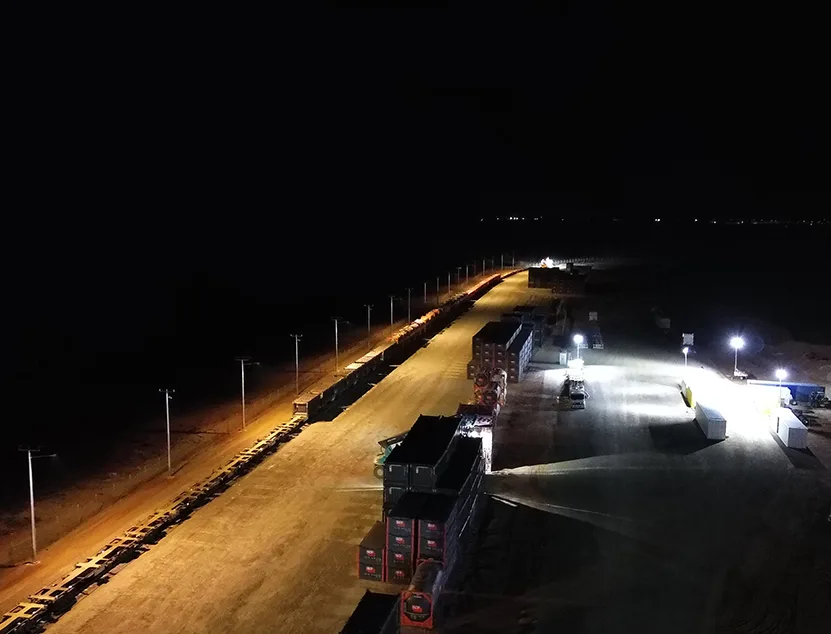
An industrial hardstand, for example, may need to support the movement of heavy equipment, loading operations, identification of obstacles and activities performed by workers at night. These requirements are not necessarily addressed by selecting a public-road lighting category.
Depending on the application, relevant parts of AS/NZS 1680, other industry-specific standards or project requirements may apply.
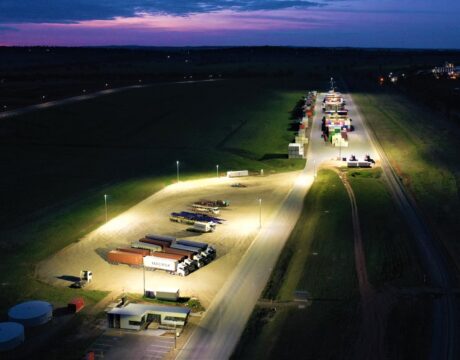
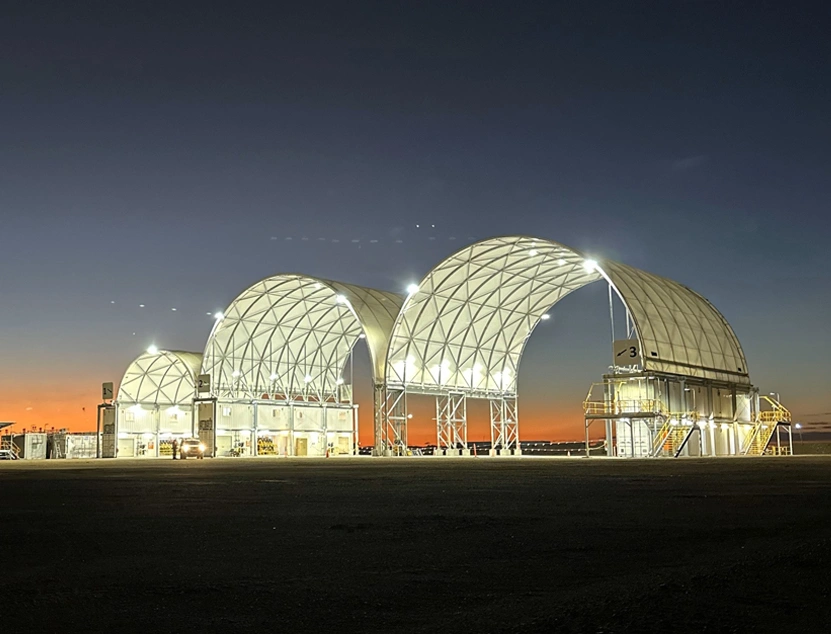
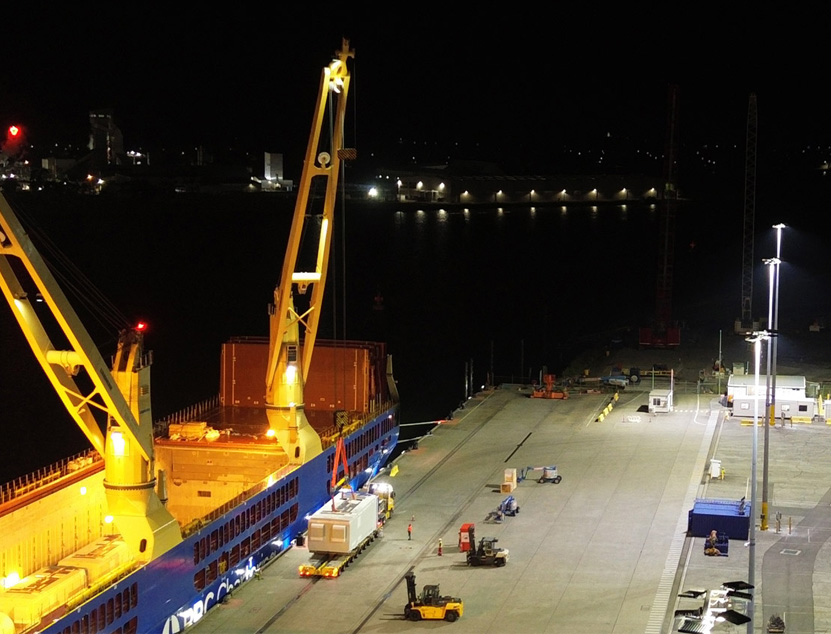
The distinction becomes particularly important on larger sites containing several types of outdoor environments. A transport facility might include public access roads, pedestrian pathways, parking areas and operational yards, each with different lighting requirements.
Rather than applying one classification across the entire site, the designer needs to establish which standards, and performance criteria apply to each area.
The correct starting point is therefore not the luminaire schedule or the proposed lux level. It is a clear understanding of the environment, its users, and the visual tasks the lighting must support.
What Engineers and Contractors Should Check Before Finalising a Design
Before a lighting design is approved or an alternative luminaire is accepted, several questions deserve attention.
- Has the applicable standard and lighting category been confirmed for the actual use of the space?
- Are the calculations assessing the correct photometric criteria, whether luminance, illuminance, uniformity or other relevant measures?
- Does the proposed mounting geometry reflect the conditions that will exist on site?
- Is the optical distribution appropriate for the target area?
- Could changes to poles, brackets, luminaires or aiming affect the calculated result?
These considerations are relevant throughout the project, from initial specification and design review to procurement, construction, and final verification.
They also highlight why lighting design cannot be reduced to a comparison of wattage, lumen output or average illuminance.
The Most Important Lighting Decision Comes Before Luminaire Selection
Effective outdoor lighting begins with understanding what the installation needs to achieve.
For a roadway, that may mean delivering the required luminance conditions for drivers. For a pedestrian environment, it may involve achieving the specified illuminance and uniformity across a pathway or public space. For an industrial facility, the requirements may be defined by the operational tasks taking place within the area.
Each application demands an appropriate set of performance criteria, supported by optical selection, mounting geometry and photometric modelling.
The AS/NZS 1158 framework provides a critical starting point for roads and public spaces, but the quality of the final installation depends on how those requirements are interpreted and delivered through engineering.
Ultimately, the effectiveness of an outdoor lighting system is not determined by how much light a luminaire produces, but by how well that light serves the application.
The right lighting design begins long before the first luminaire is selected.